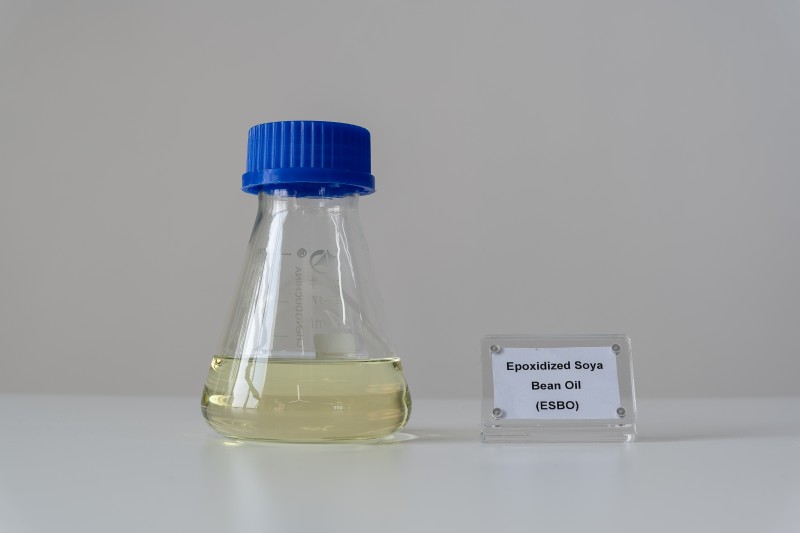
As industries worldwide move towards more sustainable manufacturing practices, the demand for bio-based raw materials is growing rapidly. Manufacturers are increasingly exploring alternatives to conventional petroleum-derived additives to improve product performance while reducing dependence on non-renewable resources. One such material gaining attention is Epoxidized Soybean Oil (ESBO), a bio-based plasticizer used in various polymer applications, particularly in polyvinyl chloride (PVC) processing. With its potential to improve flexibility, support thermal stability, and contribute to more sustainable formulations, ESBO has become an important consideration for modern plastics manufacturing. Ajay Poly Ltd. (APPL) operates in the industrial manufacturing sector, making bio-based material technologies a relevant area of interest for businesses seeking improved material solutions.
Epoxidized Soybean Oil is produced by chemically modifying soybean oil to introduce epoxy groups into its molecular structure. These groups provide functional properties that make ESBO useful as a plasticizer and stabilising additive in selected polymer formulations. Unlike conventional plasticizers derived entirely from petroleum-based feedstocks, ESBO originates from a renewable vegetable oil source.
Its compatibility with PVC makes it particularly useful in applications where flexibility, processing performance, and thermal stability are important. ESBO is commonly used as a secondary plasticizer and co-stabilizer in PVC formulations, helping complement the performance of primary plasticizers and certain heat-stabilising systems. Its effectiveness depends on the formulation, dosage, processing conditions, and the requirements of the final application.
One of the key advantages of ESBO is its renewable feedstock. Soybean oil provides a plant-derived starting material, offering manufacturers an alternative to some conventional petrochemical-based additives. Incorporating bio-based ingredients into suitable formulations can help diversify raw material sourcing and support sustainability initiatives.
However, bio-based does not automatically mean that a material is entirely harmless or environmentally superior in every application. The overall environmental impact of ESBO depends on factors such as agricultural sourcing, production processes, transportation, energy consumption, and end-of-life treatment. Manufacturers should therefore assess its sustainability benefits through appropriate technical data and life-cycle considerations.
Plasticizers are additives used to improve the flexibility, workability, or processability of certain polymers. In PVC applications, they help modify the material's mechanical characteristics according to the requirements of the finished product. ESBO can contribute to this function while offering additional benefits through its epoxidized molecular structure.
When incorporated into compatible PVC formulations, ESBO can help improve flexibility and processing behaviour. It is often used alongside primary plasticizers rather than as a complete replacement for them. The right combination depends on the intended application, performance specifications, and manufacturing conditions.
For processors, selecting an appropriate plasticizer system involves balancing flexibility, durability, migration resistance, thermal behaviour, and cost. Formulation trials are essential to determine the most suitable ESBO concentration for a particular product.
PVC can undergo thermal degradation during processing if exposed to excessive heat or unsuitable processing conditions. ESBO can support certain PVC heat-stabilising systems by interacting with acidic degradation products and contributing to improved thermal stability. This makes it useful in selected formulations for products such as flexible PVC components, films, sheets, flooring, cables, and other compatible applications.
Its contribution to thermal stability depends on the complete formulation, including the primary stabiliser system, processing temperature, residence time, and other additives. ESBO should therefore be viewed as a formulation component rather than a universal stabiliser capable of replacing every other stabilising ingredient.
ESBO is often described as a lower-concern or bio-based alternative to certain conventional plasticizers, but the term non-toxic requires careful qualification. Safety depends on the product's purity, residual substances, intended use, exposure conditions, and applicable regulatory requirements.
For food-contact applications, for example, the finished material and the ESBO used in its manufacture must comply with the relevant regulations and migration limits. Approval for one application does not automatically establish suitability for every other use. Manufacturers should review safety data sheets, technical specifications, relevant certifications, and applicable regulatory requirements before selecting ESBO for a product.
A responsible approach to material selection considers the complete formulation and the safety of the finished product—not simply the origin of one ingredient.
ESBO is used in a variety of applications where PVC flexibility, processing characteristics, and stabilisation are important. Depending on the formulation, it may be incorporated into flexible films, sheets, flooring materials, artificial leather, selected cable compounds, hoses, and other PVC-based products.
It is also relevant to certain packaging and food-contact applications where the particular grade and finished formulation meet the applicable requirements. In these cases, manufacturers must pay close attention to migration performance and regulatory compliance.
The suitability of ESBO varies with the polymer system, manufacturing method, service conditions, and required product characteristics. Careful evaluation helps ensure that the selected formulation meets both performance and safety expectations.
The shift towards sustainable manufacturing involves more than replacing one ingredient with another. Businesses must consider renewable sourcing, manufacturing efficiency, product durability, waste reduction, regulatory compliance, and end-of-life management.
ESBO can contribute to this transition by introducing a vegetable-oil-derived component into compatible formulations. In some applications, it may help manufacturers reduce reliance on selected petroleum-derived additives. Its use can also support product-development strategies focused on incorporating renewable raw materials.
Nevertheless, sustainability benefits should be evaluated against the complete formulation and supply chain. Bio-based content alone does not guarantee biodegradability, recyclability, or a lower overall environmental footprint. Technical validation and transparent environmental assessments are important when making sustainability claims.
For manufacturers searching for the best Epoxidized Soybean Oil (ESBO) manufacturer in India, supplier selection should be based on verified product quality, technical support, consistency, traceability, and application suitability. Important evaluation criteria include epoxy value, acid value, colour, moisture content, purity, batch-to-batch consistency, and compliance with the relevant technical specifications.
A reliable supplier should be able to provide product documentation, safety information, handling recommendations, and guidance on application-specific requirements. Buyers should also evaluate supply capacity, delivery reliability, quality-control practices, and the availability of technical assistance during formulation trials.
Ajay Poly Ltd. (APPL) is an industrial manufacturing company with expertise in refrigeration sealing systems, profile extrusion, and OEM tempered glass for appliances. For businesses exploring ESBO sourcing, it is important to confirm APPL's specific product portfolio and whether it manufactures or supplies ESBO before presenting it as an ESBO manufacturer. This distinction helps maintain technical accuracy and builds trust with prospective customers.
As sustainability requirements, regulatory expectations, and customer preferences continue to evolve, bio-based additives are likely to remain an important area of polymer innovation. ESBO offers manufacturers a useful option for selected PVC formulations because of its renewable origin and its potential contribution to plasticizing and stabilising performance.
Future developments will depend on advances in formulation technology, raw material availability, product consistency, safety evaluation, and the economics of large-scale adoption. Manufacturers that assess these factors systematically will be better positioned to select materials that meet both operational and sustainability objectives.
Epoxidized Soybean Oil is an important bio-based additive for selected polymer applications, particularly PVC, where it can contribute to flexibility, processing performance, and thermal stabilisation. Its renewable feedstock makes it an attractive alternative for manufacturers seeking to diversify raw materials, although its safety and environmental benefits must be assessed for each intended use.
For businesses researching the best Epoxidized Soybean Oil (ESBO) manufacturer in India, technical quality, application expertise, regulatory compliance, and transparent product information should guide the decision. Ajay Poly Ltd. (APPL) brings experience in industrial manufacturing, while any specific ESBO manufacturing or supply offering should be verified directly before making product claims.
By combining sound material science with responsible sourcing and rigorous quality control, manufacturers can make more informed decisions about bio-based additives and support the continued development of efficient, reliable, and increasingly sustainable polymer products.